A lot of businesses hear “automation” and immediately picture a chatbot. That is part of the problem.
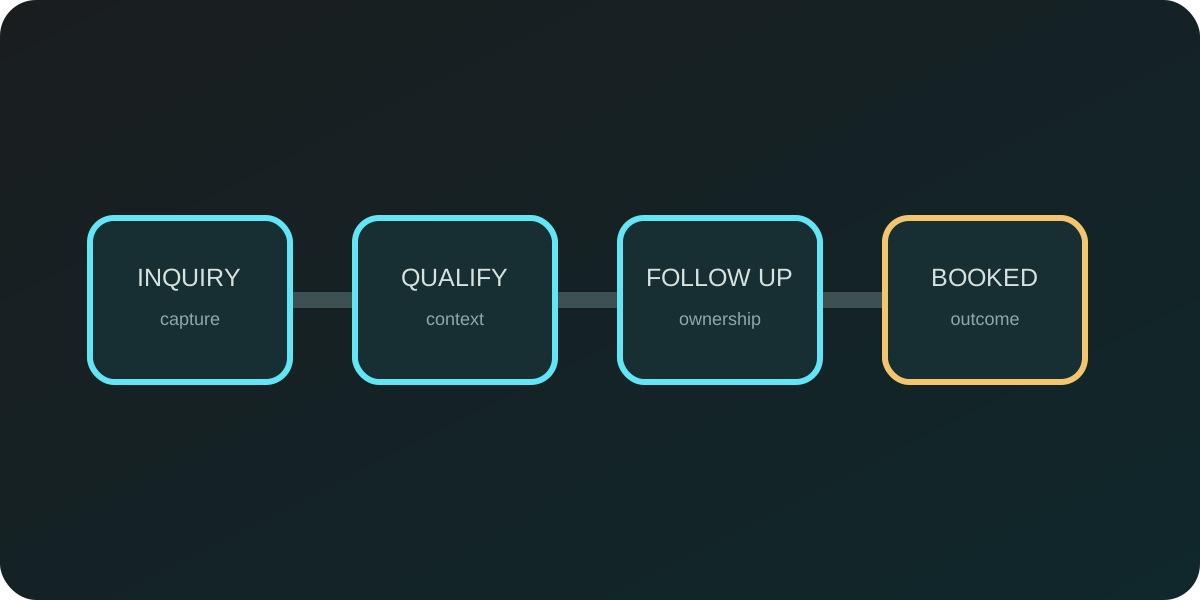
A generic chatbot and a real lead-response system are not the same thing. A chatbot usually exists to answer questions. A real lead-response system exists to capture the inquiry, respond fast, qualify the lead, follow up consistently, and move the person toward a booked appointment.
That is a very different job.
What a generic chatbot usually does
A basic chatbot often greets the visitor, offers a menu, answers a few common questions, and maybe collects contact info. That can be useful, but it often stops there.
It may create the appearance of responsiveness without actually creating movement. That is why a lot of businesses install chat tools and still do not see better booking outcomes. The tool talks, but it does not really manage the lead.
- Greets the visitor
- Offers a menu
- Answers common questions
- Maybe collects contact info
What a real lead-response system does
A real system is built around progression. It does not just reply. It pushes the conversation forward.
That usually means it is designed to respond immediately, ask the right qualification questions, adapt to the type of inquiry, continue follow-up if the lead does not book immediately, and create a clear next step like an estimate, consultation, or scheduled appointment.
In other words, it is closer to a structured sales workflow than a chat widget. That is exactly the difference Automationation tries to make visible on the features page and demo page
- Respond immediately
- Ask the right qualification questions
- Adapt to the type of inquiry
- Continue follow-up if the lead does not book immediately
- Create a clear next step like an estimate, consultation, or scheduled appointment
If you are comparing tools, focus less on whether it chats and more on whether it moves leads forward.
Automationation is built around lead capture, fast response, qualification, follow-up, and movement toward booked appointments.
Why this matters for service businesses
In service businesses, the lead usually does not want a long digital experience. They want acknowledgment, clarity, speed, and a next step.
If the system creates friction, confusion, or dead ends, it is not helping. That is why the best systems are not designed to sound clever. They are designed to reduce drop-off.
If you have already felt the pain of leads getting stuck between inquiry and appointment, this article connects directly to that issue: Why Home Service Businesses Lose Leads Before the First Appointment
The practical takeaway
If someone offers you “a chatbot,” that does not automatically mean you are solving the problem. The real question is: will this system help us turn more inquiries into booked jobs?
If the answer is no, then it is probably just a chat layer. If the answer is yes, then you are looking at something more valuable: a real lead-response system.
And if speed is the part you are trying to fix first, this companion piece is worth reading next: How Fast Should You Respond to a New Lead?