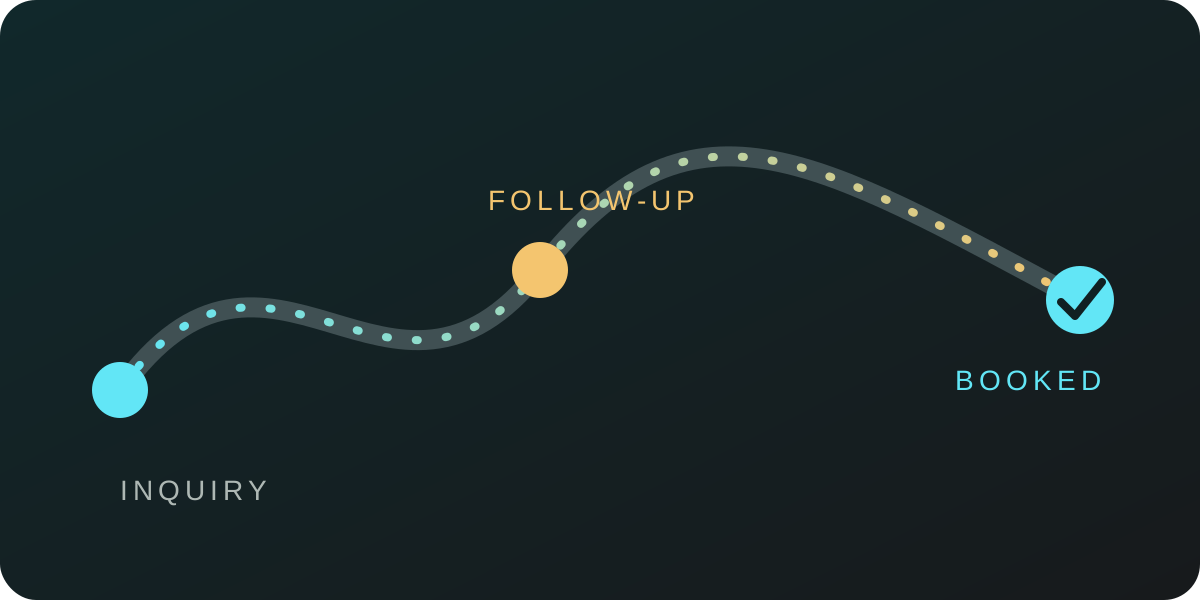
Most businesses do not lose leads because demand is weak. They lose them in the gap between inquiry, response, and follow-up.
Someone fills out a form. Calls the business. Sends a message. Maybe they were ready to book when they reached out. But then the response is slow, inconsistent, or never comes at all. By the time someone follows up, the lead has already cooled off, moved on, or booked with someone else.
This happens more often than most owners realize.
A lead comes in while the team is busy. Someone plans to call back later. A text gets sent but there is no real follow-up after that. The lead replies once, then sits. Or worse, nobody even sees the inquiry until the next morning.
What it looks like from the owner’s side
From the owner’s perspective, it can feel like the marketing is not working, the leads are low quality, or everybody is just price shopping.
Sometimes that is true. A lot of the time, though, the real problem is much simpler: the lead was never handled well enough to become an appointment.
- “Our marketing isn’t working”
- “Leads are low quality”
- “People are just price shopping”
Where the breakdown usually happens
There are a few common failure points, and they tend to compound each other quickly.
Slow first response gives away the moment. When someone reaches out, they are usually comparing options in real time. If your business responds late, you are handing that window to somebody else. If response speed is a known issue, this related resource breaks down the practical standard: How Fast Should You Respond to a New Lead?
No clear next step kills momentum. A response by itself is not enough. If the lead is not guided toward a quote, estimate, consultation, or appointment, the conversation often dies in place.
Weak or inconsistent follow-up quietly drains booked jobs. A surprising number of leads do not book on the first touch. That does not make them bad leads. It often means they need another message, a reminder, or a better next step.
Manual handling breaks under pressure. When response and follow-up live entirely in someone’s memory, inbox, or spare time, things slip. That is not a character flaw. It is a systems problem.
If this gap sounds familiar, look at the actual flow.
See how Automationation handles lead capture, fast response, qualification, and follow-up without leaving the next step to chance.
What the businesses booking more jobs do better
The businesses that book more of the leads they already have usually do a few things better. They respond fast, qualify quickly, follow up consistently, and make the next step obvious.
That is the difference between “we got the lead” and “we booked the job.” If you want to see what that kind of workflow looks like in practice, the best next stop is the Automationation demo and features page
- They respond fast
- They qualify quickly
- They follow up consistently
- They make the next step obvious
The problem may not be demand
If you are getting inquiries but not seeing enough appointments come out the other side, the issue may not be demand.
It may be the gap between the moment the lead comes in and the moment someone actually moves them forward. And if your current solution is “add a chatbot,” it helps to understand the difference between a tool that talks and a system that moves leads toward booked work: What a Real Lead-Response System Does Better Than a Chatbot